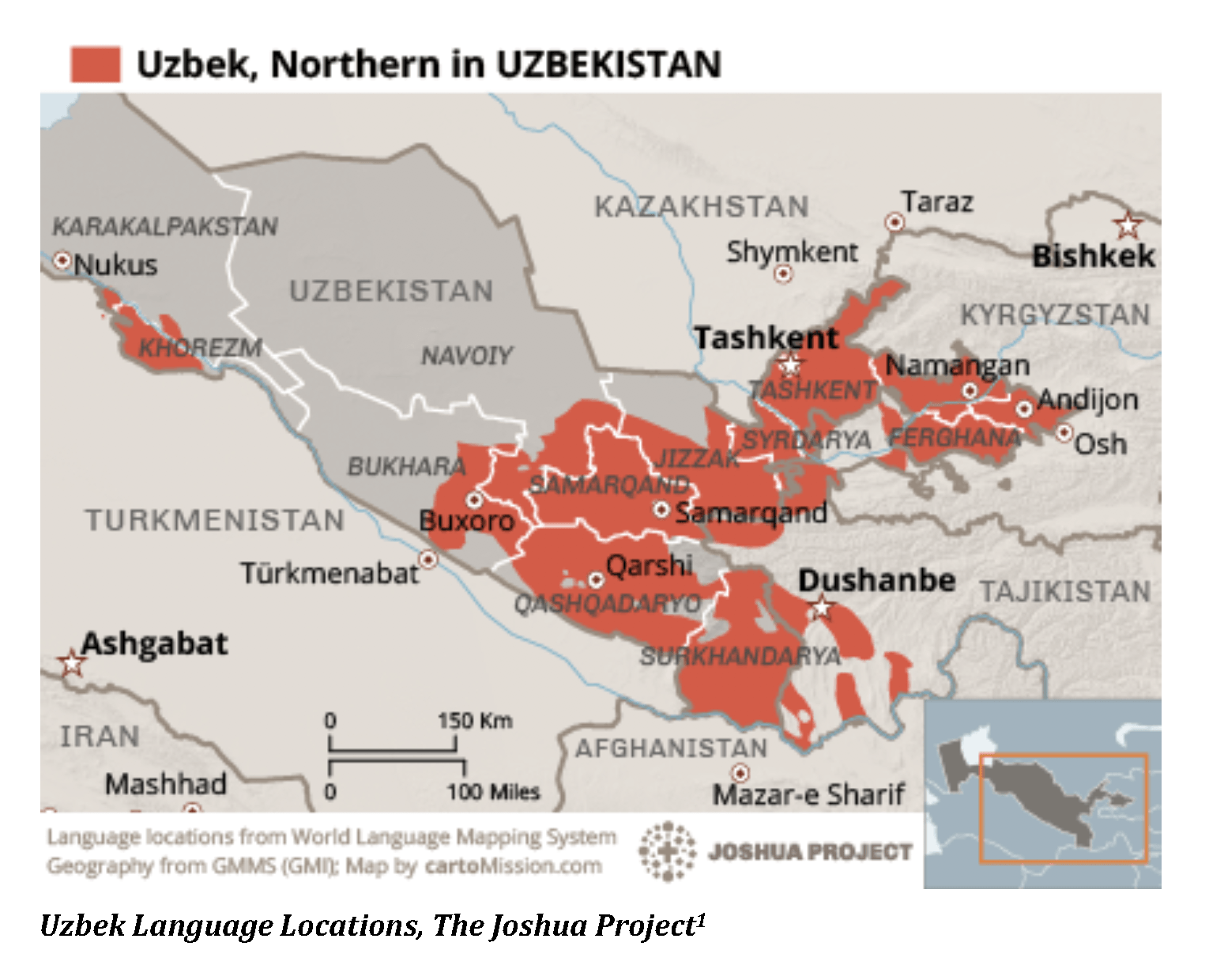
On a Sunday afternoon, I met a friend at her house for a play date with our kids. We had met recently at our kids’ school so we started talking about our homelands and the journeys which had led us to the Big Apple. We talked about my life in Dominican Republic, and about a decisive moment in her country during the 80s—of civil war and turmoil—when Russia was trying to regain total control over their territory and lives; a moment that led her to leave her home and family and move to the United States. She recounted how It was a time of great scarcity in which Russia intended to dominate their ethnic group by suppressing Islam, neutralizing the power of Uzbeki leadership by killing, incarcerating, or forcing them into exile, and trying to make Russian the official language in educational institutions. At that time, in her 20s, my friend decided to move to the USA with the little English she knew to further her education (B., Yana, March 2016). As opposed to the phenomenon of Americanization I experienced in Dominican Republic in the 80s and 90s—which was mainly a by-product of massive migrations to the USA after Trujillo’s dictatorship ended in 1961, and of a flourished economy due to our tourism hence a broader cultural exposure—the case of the Russification of Uzbekistan in the 80s and 90s was an imposition, a form of oppression and control. After our brief conversation, I decided to deepen my knowledge into Uzbekistan’s history and language conflict.
Uzbekistan Language Conflict: A Case Study